
Photo Gallery
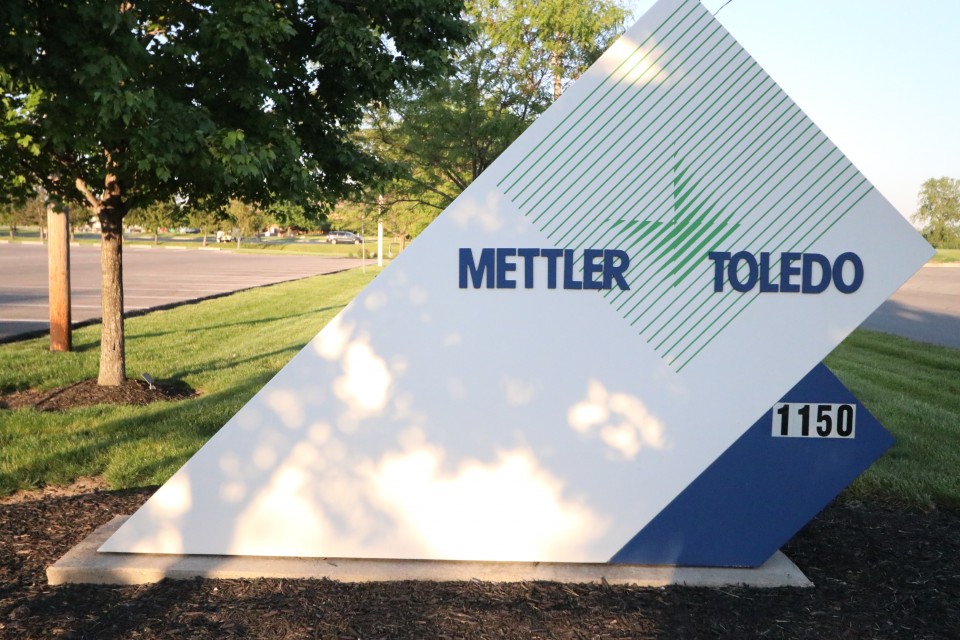
Mettler Toledo stakes out their turf at 1150 Dearborn Dr., Worthington, OH 43085 with this entry sign.
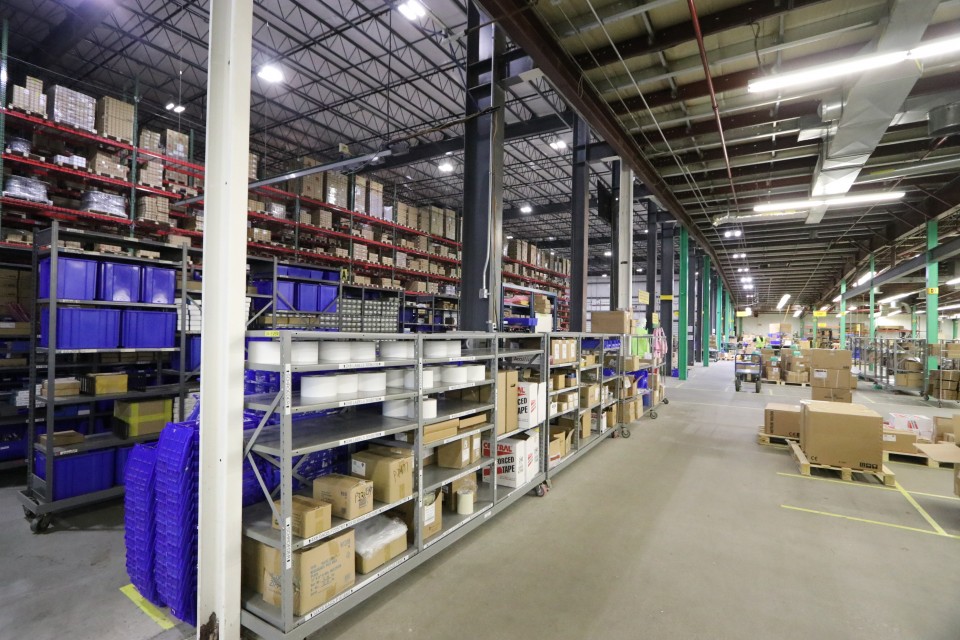
The Mettler Toledo facility is 160,000 sq feet and opened in 1974. They have approximately 240 employees working one split shift from 6:00 AM – 8:00 PM. This facility is the North America Logistics Hub and ships 1000 lines/day.
There are four main manufacturing areas (low volume/high mix hand assembly) :
Configuration (Industrial, Lab, Retail products)
Industrial Product assembly
Retail Prepack Product assembly
Engineer to Order (Electronic Controls)
The facility also houses the following:
Metrology Lab for calibration of precision test weights
Depot Repair of Lab Products
Industrial/Lab/Retail Prepack Engineering and Marketing
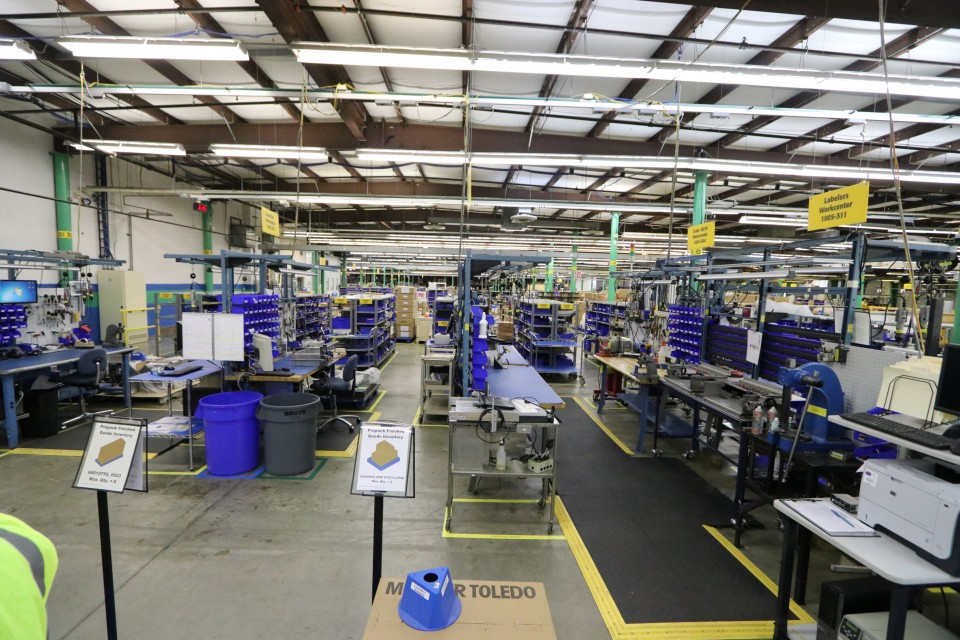
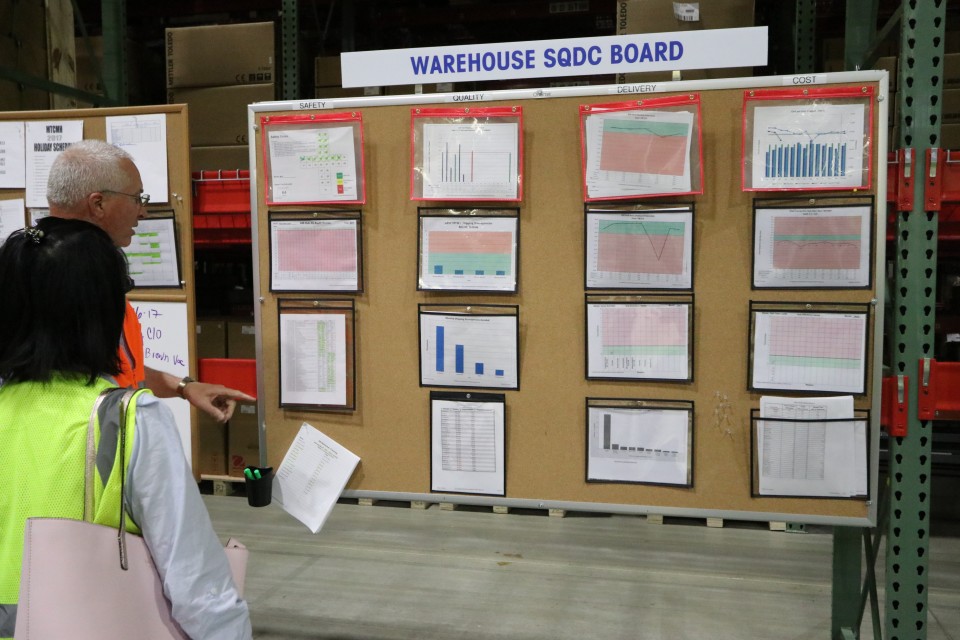
The facility's lean transformation started in 2009. They currently utilize significant visual management and U-shaped manufacturing cells with a flexible work force.
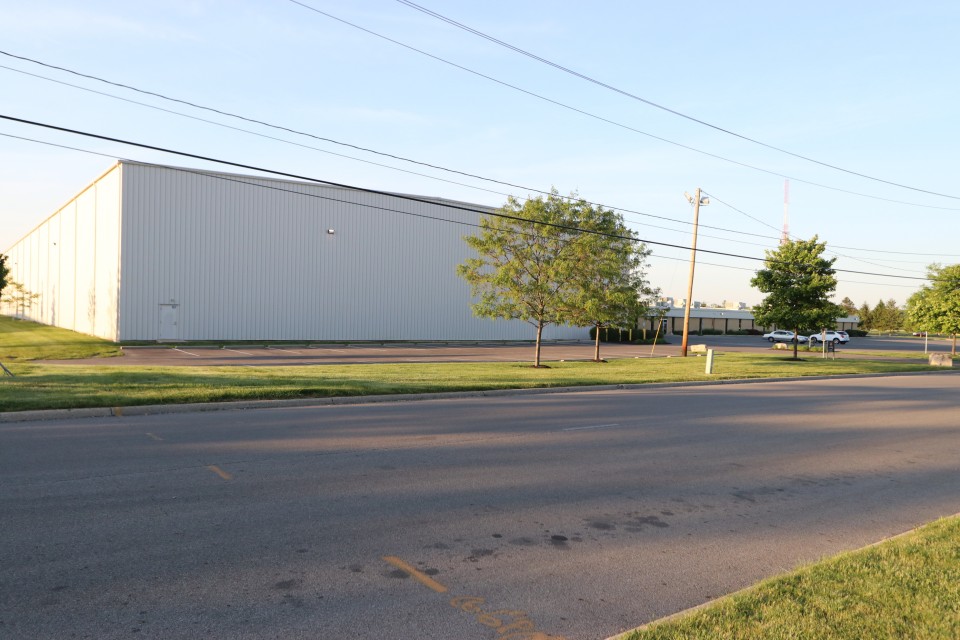
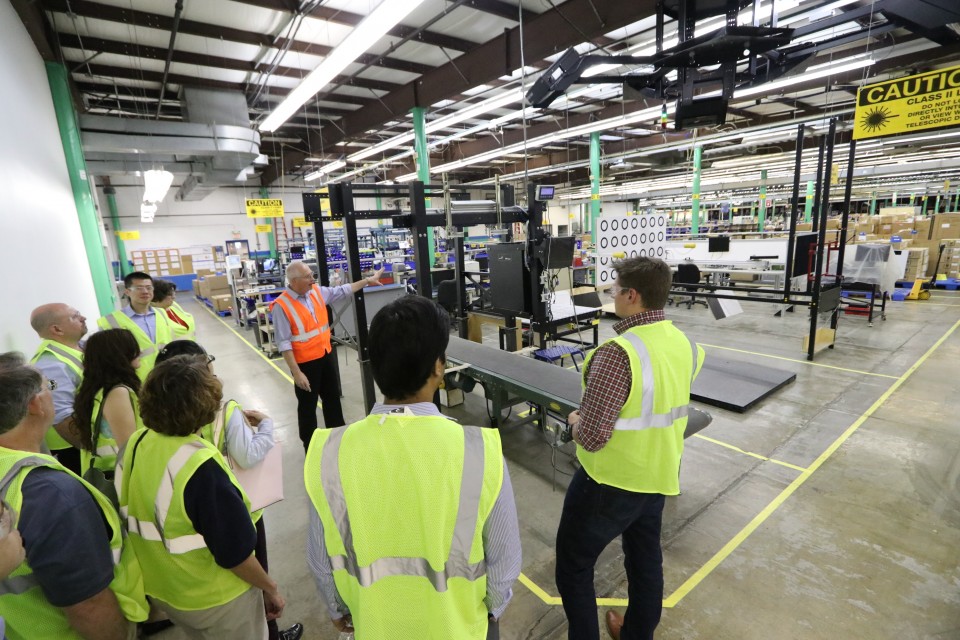
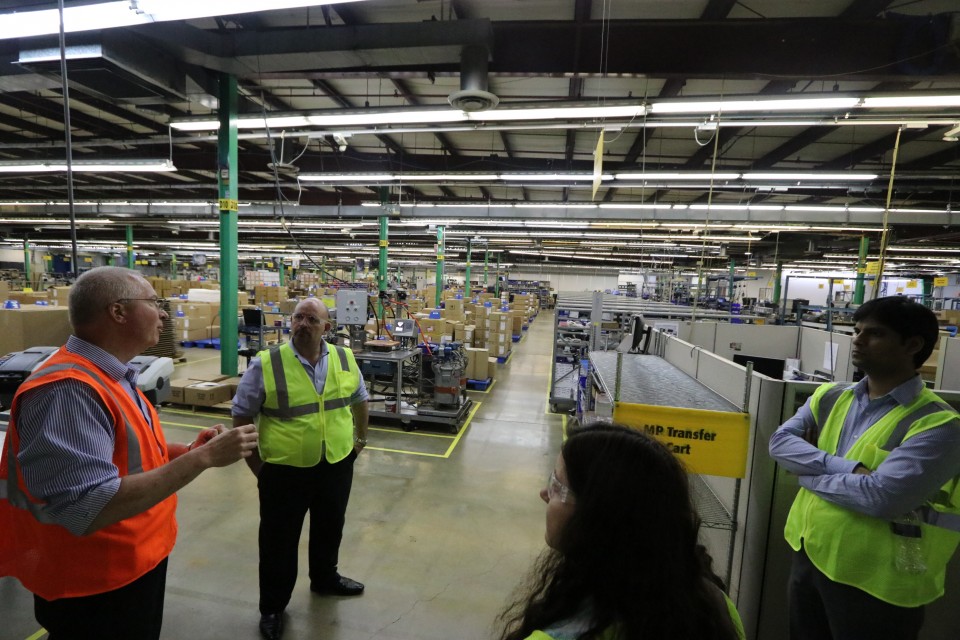
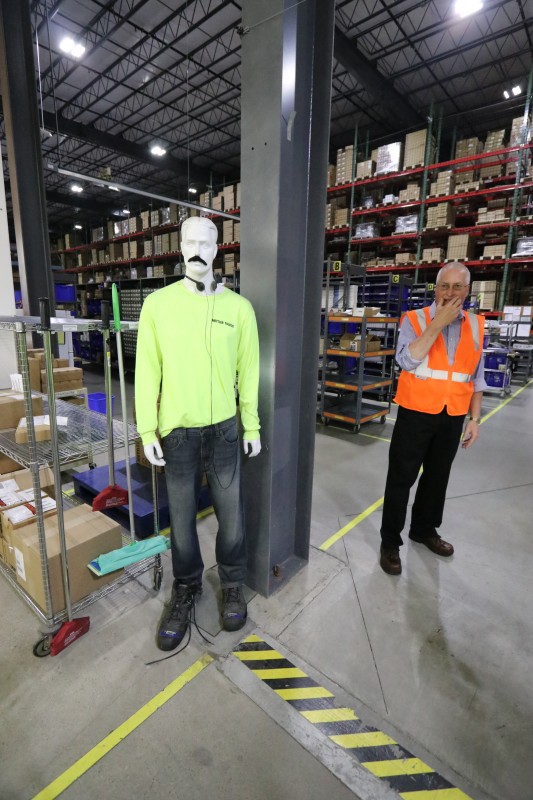
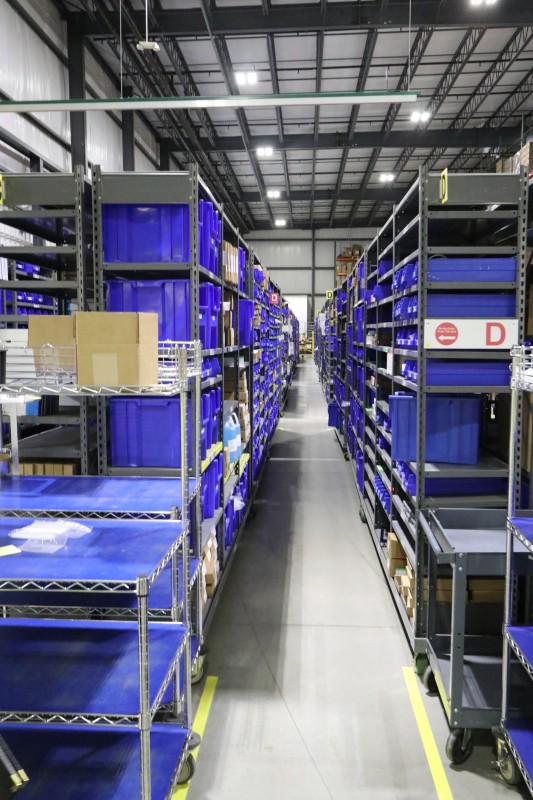
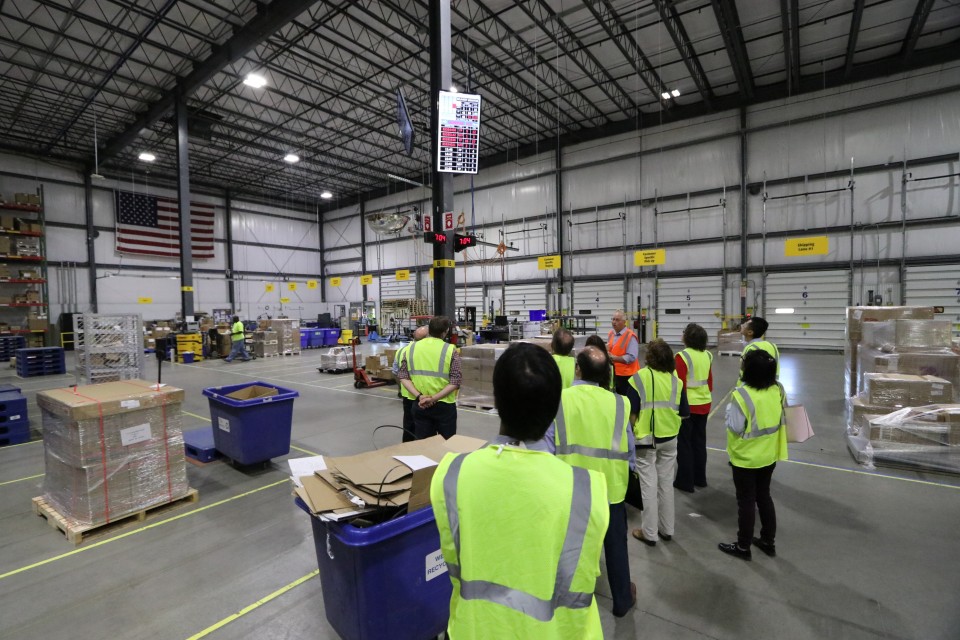
At the beginning of the tour, we got an overview of the layout. It was a very clean facility. They took great pains to keep things organized. Safety was a very high priority. Chartreuse was the guest color, so we could not easily run away unseen. Our guide, and something of a company historian, donned the more exclusive orange vest.
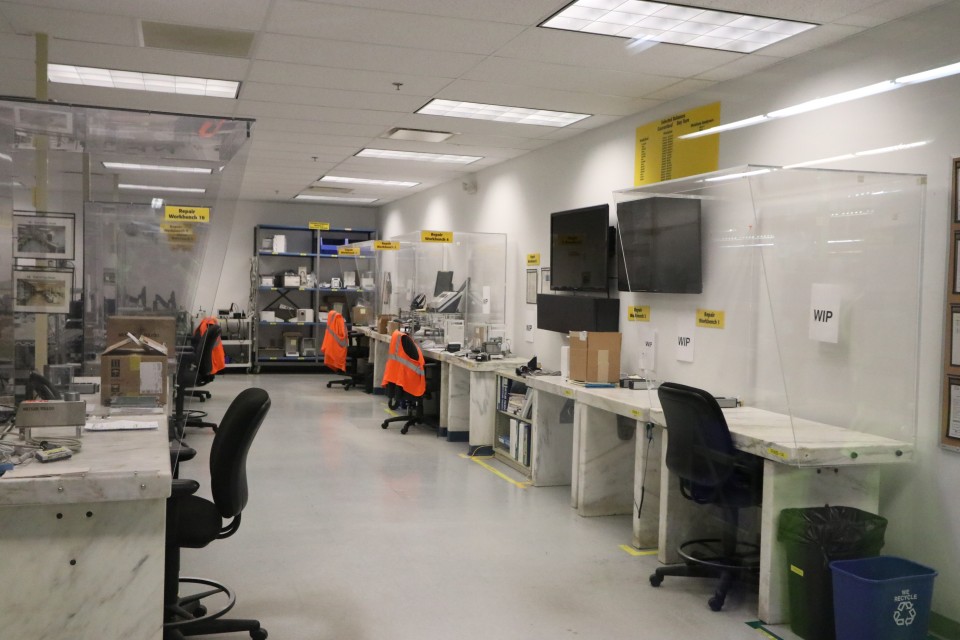
Heavy marble work benches are used to isolate precision calibration stations from vibrations. This shot is actually taken through glass. This area, though not a 'clean room,' has very controlled air flow and atmosphere to minimize influences on precise calibration of extremely sensitive scales and weights.
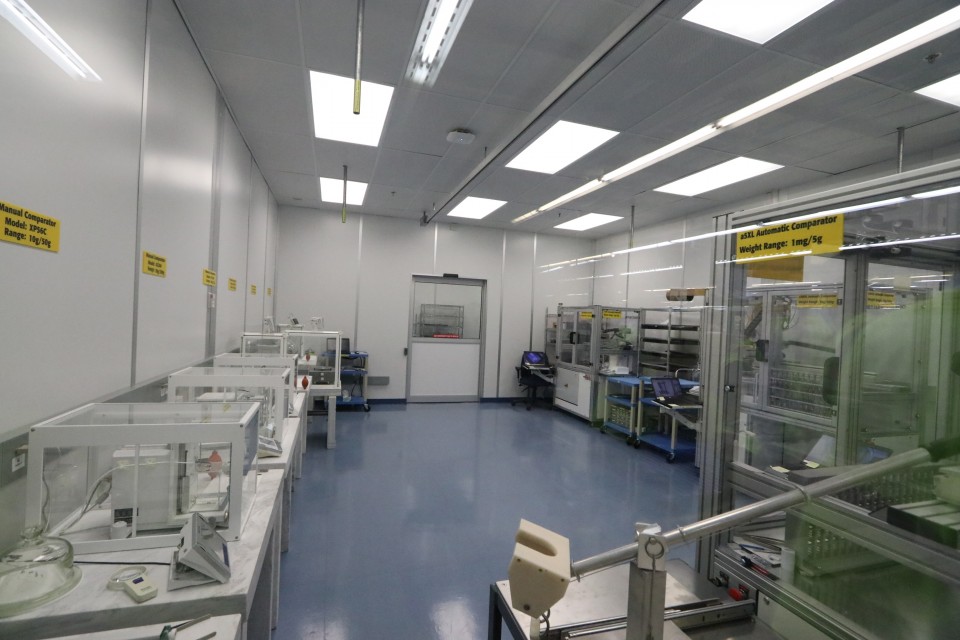
This room contains robotic and manual comparators for precision calibration of standard weights. This shot is taken through glass. This room has its own controlled air flow, atmosphere and air filtration. Many of the instruments sit on heavy marble tables to isolate them from vibration of cars, trucks, machinery, trains and so on. Even so, every once in a while, a large earthquake anywhere in the world will cause these instruments to shut themselves down due to the intense vibration of the planet.
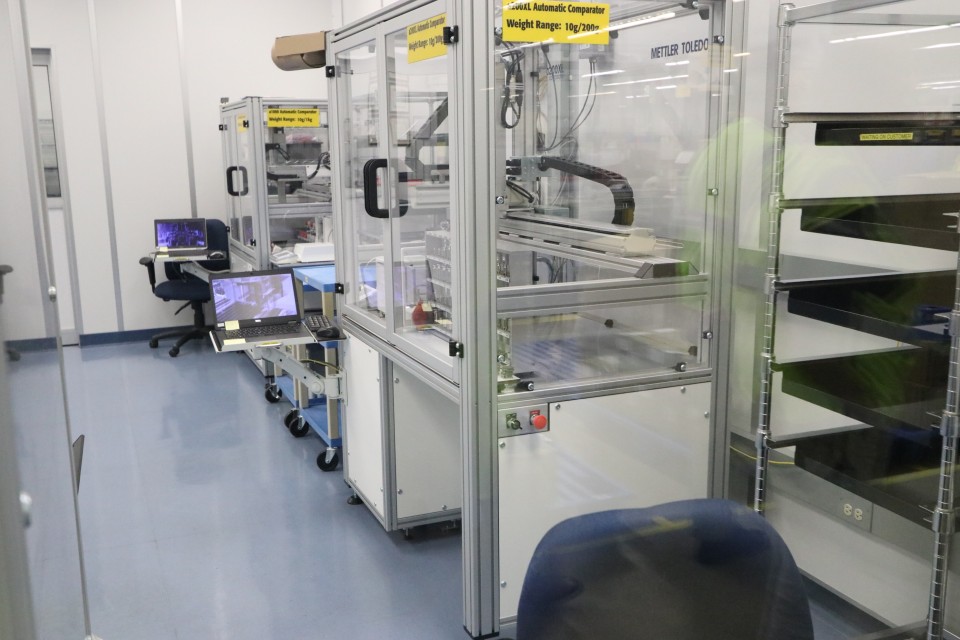
This is another shot through the glass into the same room. This has a more direct view of one of the larger robotic comparators. These machines move very slowly and deliberately as they pick up a reference weight, place it on a scale, remove it, place it back in its holder, then carefully pick up a weight to be matched, place it on the same scale, remove it and place it back in its holder. Then it repeats this cylce about five more times until it is satisfied that the weight to be matched is within tolerance to be considered the same as the reference weight. Thank goodness they found a way to give this job to a machine! Looking at the machine move, you almost felt like it was genuinely interested in its work. And it was somewhat soothing, like watching fish swim in an aquarium. And I suppose it runs 24 hours. I do not think I could do this for 10 minutes.
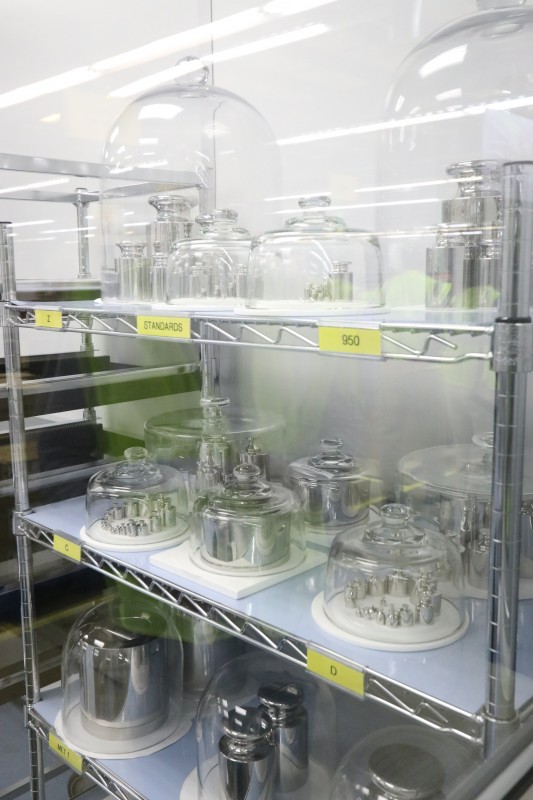
In the same room with the robots, these additional reference weights are beautifully displayed under clear glass bell jars on this rack. These are used at the manual comparator stations in that room. If you look closely, you can see that some of the bell jars cover other bell jars for double protection. These weights are so precise that if it ever becomes necessary to clean one with alcohol, they must wait ten days for the surface metal to equilibrate with the moisture in the atmosphere before they can be used. This is also true of any reference weight sent back to them for recalibration. I never thought of metal as picking up moisture. I guess I was wrong.
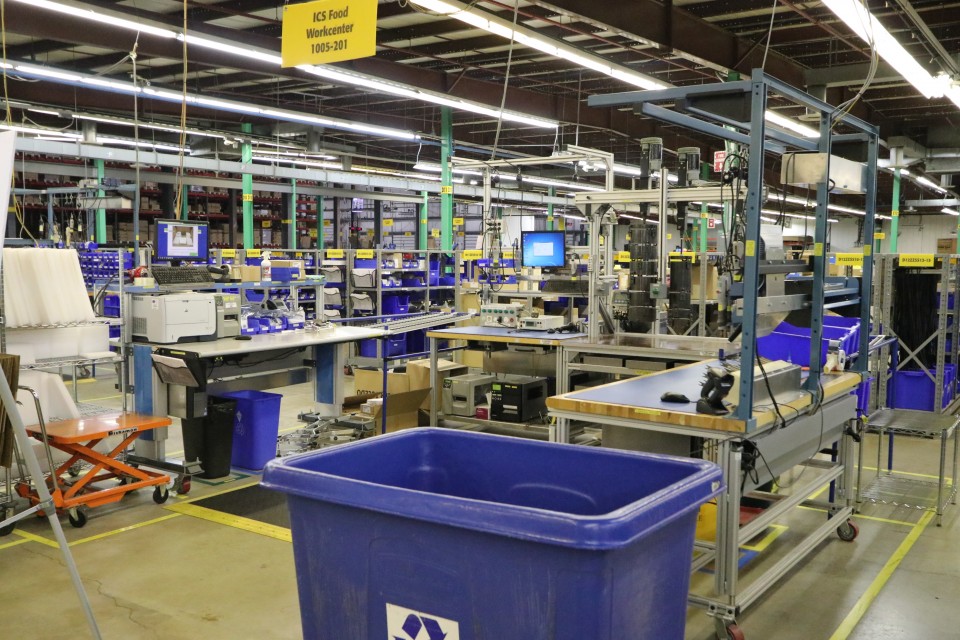
Here is a U-shaped work station. Again, everything is organized. Everything is in its place. They are very committed to fast turn-around. Many configured items can be ordered all the way up until certain times in the afternoon and still be shipped the same day. Even many service parts can be ordered all the way up until 7:00 PM and still be shipped by the close of business at 8:00 PM the same day!
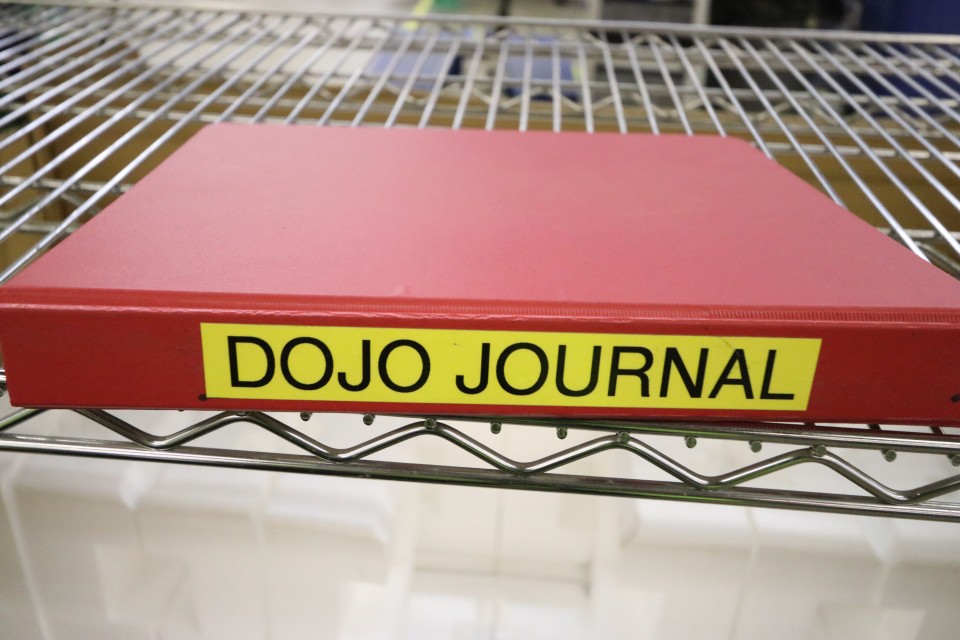
The DOJO Journal is a picture and text history of problems identified in an area and the solution that was implemented. There can be different journals in different areas. It serves to inspire team members in the types of things they might look for themselves. It also shows that their input can truly improve things.
 ASCM is an unbiased partner, connecting companies around the world with industry experts, frameworks and global standards to transform supply chains.